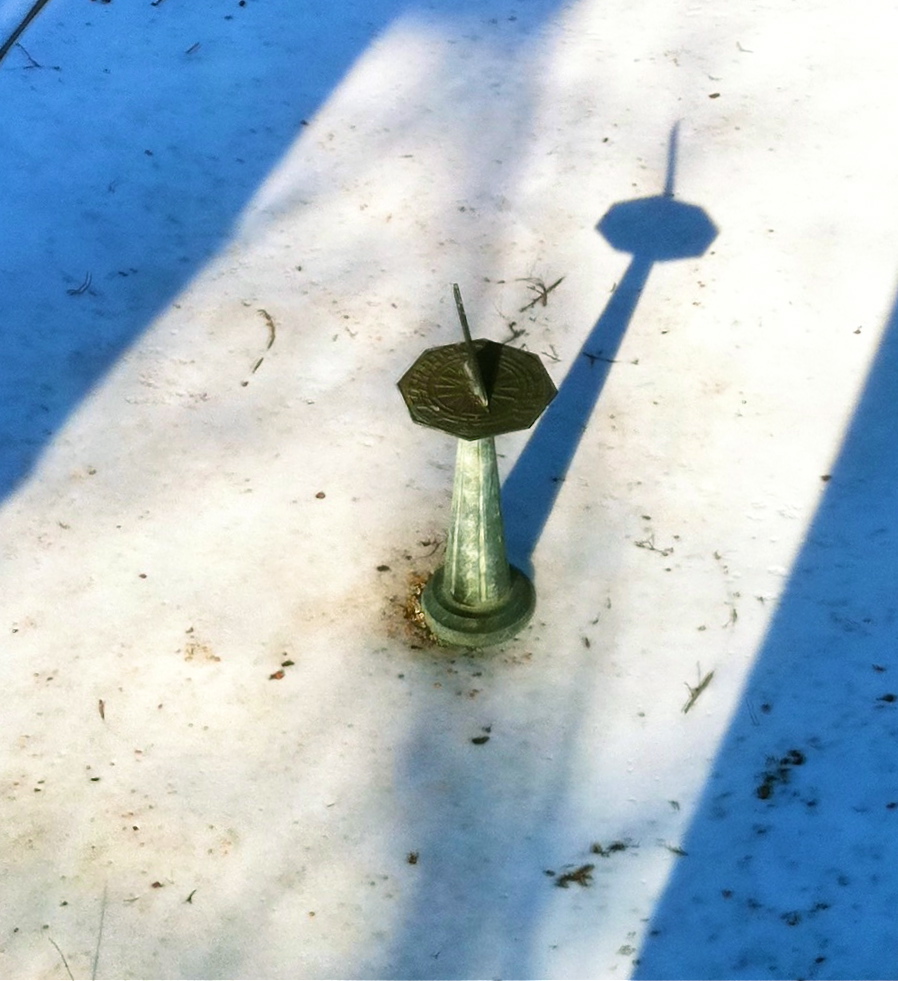
iPhone 4 / Pro HDR
iPhone 4 / Pro HDR

iPhone 4 / CameraPro
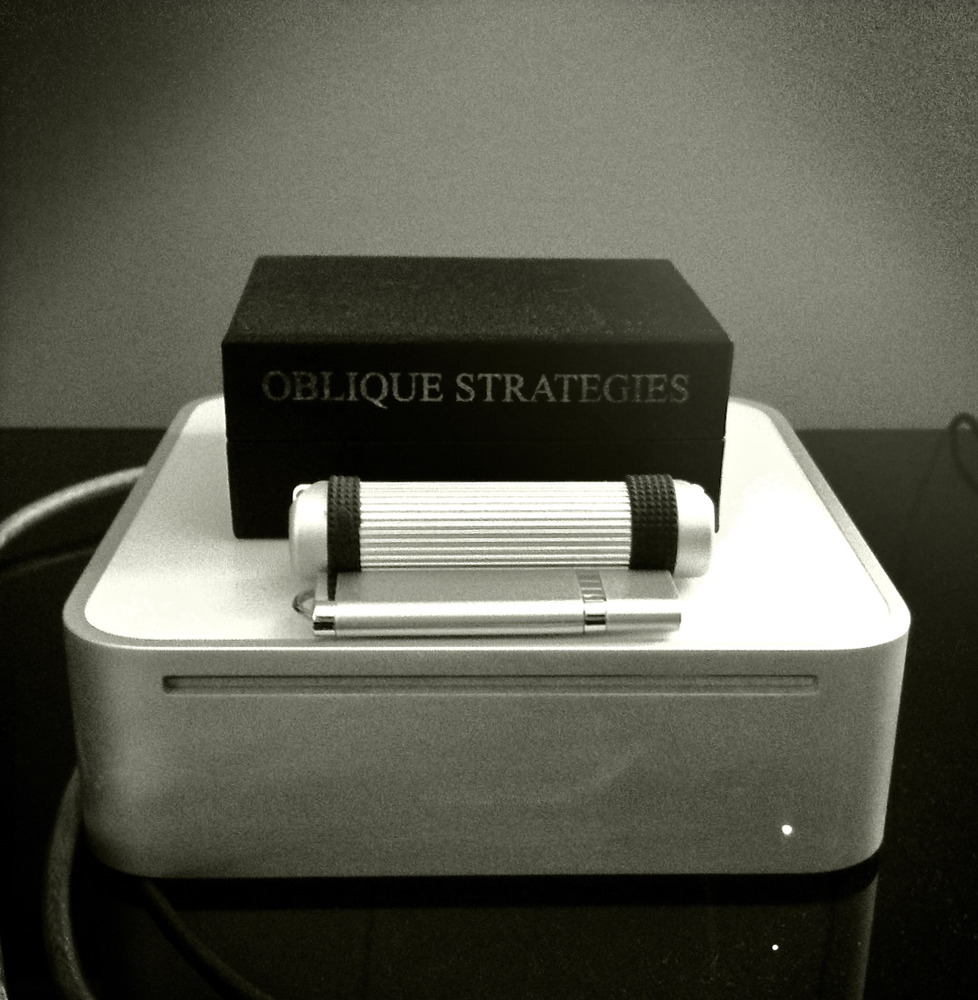
iPhone 4 / Hipstamatic / Lucifer VI Lens / Claunch 72 Monocrhome
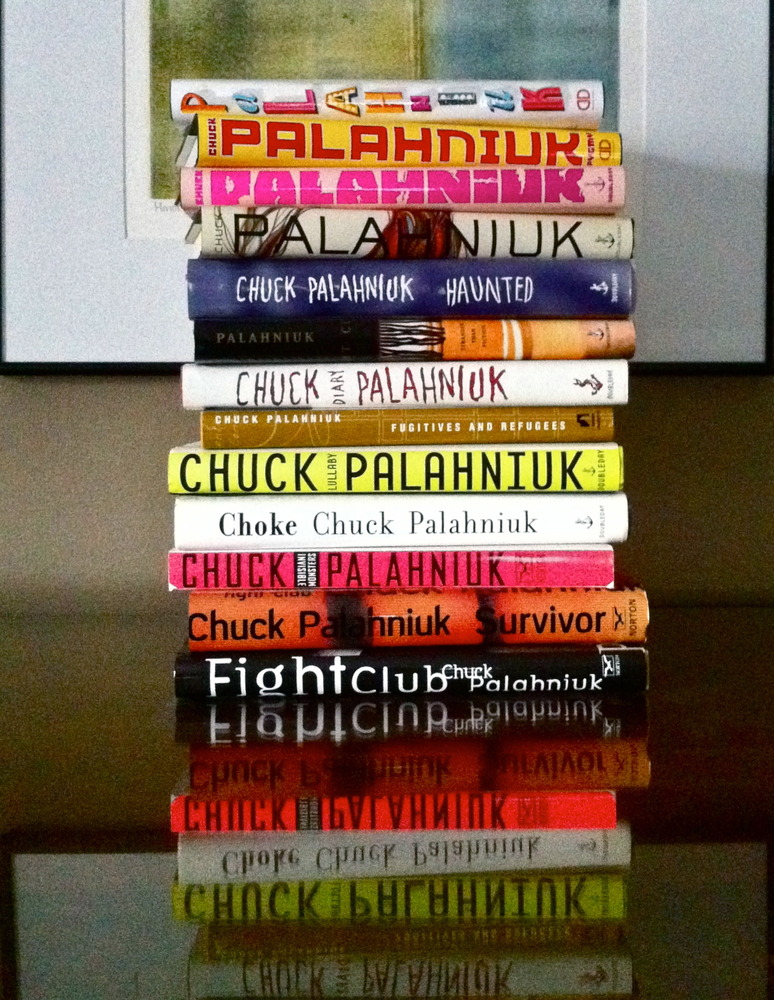
iPhone 4 / Camera+

iPhone 4 / CameraPro

iPhone 4 / CameraPro / zoom
I happened to look out of the window at around 6:30 this morning–just in time to see a huge contrail running from horizon to horizon. And then, of course, the sunrise hit it . . .
Whoa. Deep, Massive Whoa.
The photos below are followed by a video of the thing–marking, I think, the first time I’ve used that function on my iPhone. (The featured music is Brian Eno’s “Asteroid Dawn,” from Curiosities, Volume 2.)
Earlier today the talking heads on MSNBC’s Morning Joe signaled that the Tucson shootings had–right on schedule–entered the uniquely American next stage that always follows a national panic attack: They sagely looked at each other and agreed, god willing, the tragedy would become a Teaching Moment. And, as always, that pissed me off.
Because in America, Teaching Moments are encoded shrugs; the equivalent of a national “Our bad.” Teaching Moments are about broadcasting, not receiving. Think back: In wake of a gut-wrenching national experience, no one ever talks about a Learning Moment–and for good reason. Because then the onus would be on all of us to actually do something about the gut-wrench du jour. Learning Moments, not Teaching Moments, are what lead to Change Pivots–and none of the contributing parties to the Tucson shootings want to (or will) go there.
I’m pretty much an unreconstructed cynic–for me, the glass is almost always half-filled–and, both sadly and tellingly, I’m rarely disappointed. Gloomy topics? Ha! Like Thompson, I’m comfortable with these themes. So allow me to make a grim inventory of those aspects of the Tucson shootings that will definitely not be Learning Moments:
Right-wing, violent rhetoric: After a short, muted period, it will ramp up again. Even as I write this, the status of the right-wing attack machine is obviously Battle Stations. And when the blame-deflecting talking points are not being spewed, people are either revising history (that sound is Sarah Palin scrubbing her website) or in hiding (Palin and the NRA). Squint at the broadcast horizon with me–do you really see a Kinder, Gentler Limbaugh? A Sadder-But-Wiser Beck? Sign-less and gun-less Tea Party gatherings? Neither do I. Nothing learned; nothing changed.
Gun laws: Arizona has some of the loosest gun laws in the nation. Guns in bars. Guns at school. Expanded assault-clips at Walmart. While Federal law enforcement agents have standard-issue 12-bullet clips, psychotic college kids are allowed to pack three times the ammo before they need to reload. What are the bets that Arizona’s deeply fucked-up self-image as 21st century frontiersmen is going to change? Do you really think that Jan Brewer–who further loosened many of the gun laws–is going to reverse herself? Calculating, empty-pant-suit Jan Brewer? Do you have any hope that the NRA (currently in hiding from the media) is going to have a lobbying change of heart? Neither do I. Nothing learned; nothing changed.
GOP obstructionism: When the federal ban on assault weapons ran out in 2004, the Senate passed a bill extending it, but the Republican-held House–wait for-it–never voted on it. Fast-foward six years to a period of Republican obstructionism that makes 2004 look like Haight Asbury in the late ’60s. Are Republicans going to take away from the Tea Party even a single class of guns? Do you any hope at all this will happen? Neither do I. Nothing learned; nothing changed.
Safety nets for the mentally ill: Look deeply into Jan Brewer’s callous eyes–she’s letting sane people who need heart transplants die, so what are the odds that there will be funding for the improved care of the emotionally disturbed? Over the next months, when state budgets across the country are slashed–when there is significantly less funding for everything from education to infrastructure–do you hold out hope that improved care for the mentally ill will occur? Neither do I. Nothing learned; nothing changed.
None of these things will be Learning Moments, much less Change Pivots. And privately, all of us realize this–politicians, voters and media talking heads. Thus, publicly hoping that the Tucson shootings will be a Teaching Moment isn’t just ineffective, it’s knee-jerk, with all the disengaged, pantomime caring found in “Have A Good Day.”
Characterizing the Tucson shootings as a Teaching Moment gives all of us permission not to do anything more about it. It’s a way to feel concerned in the moment but in no way bothered with follow-through. In 12 months time, will MSNBC bump an hour of Lock-Up Raw for a special on whether Arizona’s gun laws have tightened up in wake of the shootings? Or for a look at the changes, if any, in the care of the emotionally unstable? And–damningly–would we watch these things a year from now? Nothing learned; nothing changed . . .
The last time I gave in to a full-blown political rant can be found here: http://bit.ly/b6Omii

The full photo gallery can be found here:
http://gallery.me.com/kulturhack#100147
(Slideshow mode is recommended)
The East Wing of the National Gallery of Art in the last dusk of the first decade of the new millennium.

For reasons now obscured by the gauziness of time, I wind up at a Feast of Seven Fishes each December 24th. (Always, I might add, seated next to the look-alike sister of a film star on whom I’ve had a decades-long crush. And no, don’t ask–it’s a murky Dante / Beatrice / Gemma sort of thing; darkly twisted psychology crossed with One-Degree-Of-Someone-More-Talented-Than-Kevin-Bacon.)
Anyway, this is the day I annually make my Social-Obligation Apple Pie–which is also increasingly known as Dub-Mix Apple Pie because over the years I’ve reduced the ingredients to six, and lately I’ve even decreased their amounts. While I’m certain that the final destination of this recipe is unavoidably a baked apple skewered on a cinnamon stick and sprinkled with brown sugar, I’m fighting the temptation because my yearly dining companion seems to like current iteration of the pie–and when she smiles, she looks exactly like her sister . . .

Best contextual wishes to all of my Twitter pals–and no, it’s not lost on me that the expired bulb is the blue one. Better progressive policy-making in 2011, mmmkay?
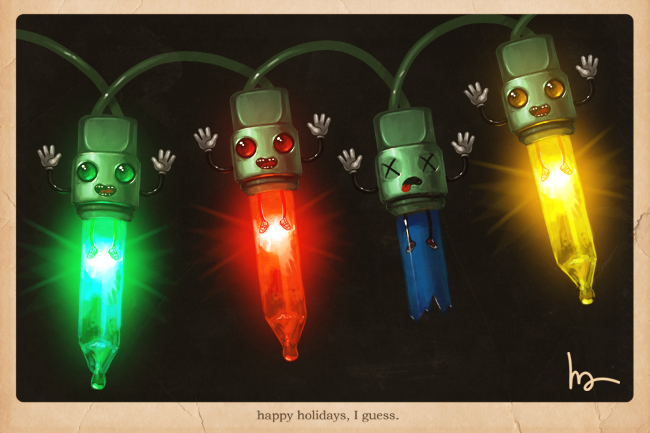
Huge thanks to io9.com for the perfect image.
You know what I love? The powder-finshed, matte-black Incase slider that lovingly (and minimally) surrounds my iPhone 4. You know what I hate? Pulling off the bottom of that case to dock the phone. You know what I hate even more? Charging it on its back, straight from USB cable.
And so I went searching, because surely I wasn’t alone in my docking need. And, lo, I wasn’t. Except that this Other Guy seemed to be an engineer–an engineer with access to machine shops and power lathes. In short, this Other Guy was in a position to actually do something about the proper docking of an iPhone inside an Incase slider. (Did I mention it’s powder-finished, matte-black and Seriously Minimal? Did I also indicate my more-than-slightly perverse love for it?)
It’s a week later, and here it sits on my desk–a dock carved out of a single piece of aircraft-grade aluminum, with–wait for it–an anodized black finish. (Steady on, there–steady–be still, my design-fetishist’s heart.) A dock that literally has been machine-tooled to fit my powder-finished, matte- . . . well, you know. And, best of all, when the phone is off, the goddamned thing looks like it’s waiting to be discovered on the Moon in a Kubrick film–which is indisputably good.

And now, because I knew you were going to ask (how could you not?), here’s a short video of the dock’s first phase of manufacture:
As Robert Duvall almost said once, ‘I love the sound of metal fabrication in the morning–it reminds me of victory . . .’
Locally, they’re just finishing rebroadcasting a remastered version of the 1987 “Roy Orbison: Black And White Night.” He was flanked by Bruce Springsteen, Elvis Costello, Tom Waits and T-Bone Burnett. The backing vocalists were Bonnie Raitt, KD Lang and Jennifer Warnes.
On the astronomically slim chance that there is a heaven, this is a breathtaking glimpse of it.
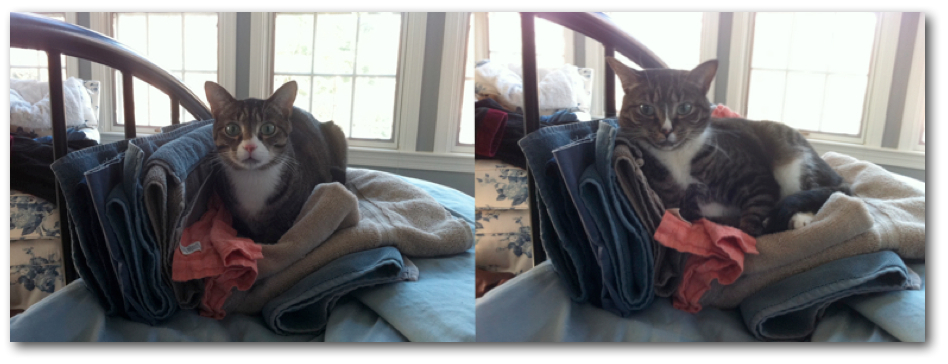
This is basically like one of those trans-dimensional episodes of Fringe, but starring cats.
In the battle for Laundry Day Lay-About Supremacy, my deeply eccentric roommates switched places no less than six times. And then, according to some obscure kitty calculus, it was suddenly So Two Minutes Ago, and they would no longer be caught dead participating in it . . .
I’ve been soldiering through Bruce Springsteen’s Darkness On The Edge Of Town box set for the last 24 hours, and I’m here to say there’s there much to love about the release–from its design to its sonics to its supplementary material.
Hellooo, voters. Look at your candidate. Now back to me. Now back to your candidate. Now back to me.
Sadly, he isn’t me. And if he stopped being an elitist, socialist liberal with Yale values, he still wouldn’t be anything like me because I’m you. Look down. Back up.
Where are you? You’re on the campus of Oxford University. With the candidate your candidate could only hope to be. What’s in your hand? Back at me.
I have it. It’s tourist bureau photos of Claremont Graduate University and Princeton. Look again. The campus photos are now diplomas. Anything is possible when your candidate is like you, or at least slower and more desperate. I’m on a broomstick.
(Look down. Back at me. I’m Christine O’Donnell and I authorized this ad.)
In O! Lucky Man, Lindsay Anderson’s savage film about post-war Britain, someone observes that you won’t make it in the catering business unless you know what to do with the leftovers–and so complete is my agreement with this food-station insight that I’m about to apply it to “Overture,” the audio file embedded in this post. But before we can get to it, to its what, we need to detour through the vaguely akimbo why . . .
At its most distilled, my ongoing work-in-progess is a novel about a former pop musician eventfully remixing a collection of songs from years ago–songs which were the last he wrote. (And if, by chance, I’ve just saved you $26.95, you’re very welcome.) High-concept-wise, it seemingly doesn’t get any simpler than this–but the operational word here is seemingly, and it’s underscored half a dozen times.
The work-in-progress didn’t start out simple: For the first time as a professional writer, I was visited by something that behaved very much like that phrase I’m too superstitious to bang down here. The awful thing that rhymes with Fighter’s Lock. Yes, uh-huh, you know–that which shall resolutely remain nameless. I’d labored for months working out the structure of the book; spent days researching Bosendorfer grand pianos; had meticulously outlined how each sequence of the story unfolded. And yet there I sat–unable to get beyond page 12. This went on for what seemed forever, even allowing for the time spent in Full-Out, Fuck-Me-Hard-It’s-All-Over Freak-Outs.
And then one day–when I was uncomfortably close to bashing-out a series romance novels under the name Christana Metroform to support my obviously washed-up self–I worked out what was wrong. I couldn’t move my protagonist into the remixing process because I onlyconceptually understood what he was tweaking. How to explain this? In terms of the songs he was rethinking, I was attempting to conjure up the tips of the icebergs and not the icebergs themselves. In the case of Page 12, I thought I only needed two actual couplets from an imaginary song which would be expected to feature a 60-line lyric. And, of course, I was Deeply Wrong.
Cue my personal Kubler-Ross Moment: Fast-forward through the numerous meetings of forehead and palm, through the finger-drumming, through the angry denial, to–yes–an acceptance of what needed to be done. Before I could write the book, I needed to write the songs. Like it or not, in order to reveal the tip, I needed to construct the whole goddamn iceberg. Fourteen of them, actually.
And this is how I came to ring up my songwriting partner from so long ago that years and years can be considered equal parts avoidance and spin. “We need to come out of retirement,” I said. “I need songs that no one but you and I will ever see.” Could there have been a sexier, more seductive offer? Apparently not, because we spent the next few months writing and recording my protagonist’s last collection. One that he would pick apart in the studio. (Full-disclosure: After asking my former collaborator to write material that only peeks through the novel’s prose, I neglected to tell him that the songs would also be turned inside-out over the course of the book. I don’t feel guilty about this–sometimes an offer can be too sexy and seductive.)
More fast-forwarding: The demos that represent the pretend collection of my fictional songwriter were completed and, lo, they turned out to be much more than research–at least to our ears. Yes, they were written in-character; yes, they were, by design, in the manner of old-school singer-songerwriter material, but they somehow transcended their deep-background status. Fast-foward once again: The demos did the trick, and my work-in-progress instantly moved beyond page 12. If not exaltation in the streets, there was at least a bonafide Risky Businessmoment that involved me, tube socks, underwear, savage air guitar and a waxed, hardwood floor. But, critically (and less disturbingly), something else happened.
I still remember pointing out to my collaborator that beyond functioning as a soundtrack to the book, the songs were narrative enough to be a set of theater songs. Which–finally–brings us to “Overture.” As I continued to wrestle with the book, my collaborator wrapped a selection of demo melodies into–well, you know.
Yet more fast-fowarding: Discussions with a theater company ultimately fell apart and, sucked back into my writing, the spin-off demo faded into the background. Until today, that is, when I rediscovered it while searching for another demo I needed to tweak the manuscript. Unsurprisingly, “Overture” has remained baroque, fun and, er, theatrical–so what to do? what to do? Spoiler alert: it’s attached to this post . . .
At this juncture, it’s not my intent to release the demos into the wild. After all, they were created for my ears only and it would would be very much like including my working outline with the book. (Which, it occurs to me, is not completely true–there are three songs that definitely transcend their origins, even the being-written-in-character-and-genre bit.) But “Overture” is something different; something designed to be a once-removed core sample of the original demos. And because of this, “Overture” isn’t the inspiration for anything in the novel and, more importantly I’ve a distinct intellectual distance from it. So why not? Why the hell not, indeed.
Thus, Gentle Reader, here’s a glimpse into the musical underpinnings of my work-in-progress that, in their sheer and dramatic orchestral-ness really aren’t underpinnings at all. Insert here your favorite one-hand-clapping metaphor for paradox. If this were a film trailer, “Overture” would be the over-the-top scene that doesn’t feature in the release print–that extra exploding car hurtling pieces of itself at the camera before the smash-cut to black and “Coming Soon.” Up until now, I’ve always wondered about those kinds of trailer moments–why aren’t they included in the release? But having rediscovered “Overture,” I now understand: They’re unrepentant shards of because-we-canfilmmaking that don’t fit into their respective movies and yet remain too cool for the cutting room floor. It’s less a con game than self-indulgence. And you know, I’m okay with that . . .
“Overture.” Smash-cut to black. Legend: “Coming Soon.”
[restore audio link]
Welcome to what’s probably my 80th beard. And, of course, these days I’m thinking: “80–that’s a very lucky sound number if ever I heard one.” Because, like someone with a gambling problem, my urgent need to believe makes everything seem like, well, An Auspicious Sign.
What I so passionately embrace is that this time, this beard will make me look like exactly Sean Connery. I’ve even wandered around for days speaking in a thick Scottish burr to encourage the growing whiskers.
So much, then, for belief–because what I actually know to be true is that any day now I’ll catch my reflection in a window and see that once again I bear a striking resemblance not to Sean C, but Eddie, the Jack Russell on Frasier. (See chart below.) So much so that I’ve seriously considered boot-blacking my nose and going trick-or-treating this year.
But let’s pause for a moment and think about this: My eightieth beard. Really? You might think this implies that those other 79 runs at Sean-dom which ended in Deeply Jack-Russell-eques ways have taught me nothing. And you’d be right.
Here’s the thing: Where anyone else would recognize obsessive-compulsive behavior and seek help (me–I’m Kulturhack, and I can’t stop growing a beard; them–Hi, Kulturhack, welcome!), I see a touching, very American belief in perfectibility–even in the face of enormous odds. Deep in my heart, I just know I can bootstrap my way to Sean Connery, if only I keep at it and blindly ignore the facts.
And further, I think I should be forgiven this naivety. After all, I’ve watched the Palins, Angles, Bachmanns, and even O’Donnells attempt to will themselves into high office in spite of the overwhelming facts. I dream of being Sean Connery; they undoubtedly want to be president–and the fact that at the end of the day we’re all Eddie has never slowed them–or me–down . . .
Put another way: The day Sarah Palin takes the oath of office as president of the United States, I’ll be Sean Connery.
I just know it.

 CultureHack