Fitz And The Tantrums, Curated

Sometimes you stumble across a band that’s like a holiday infatuation–it’s all about a specific time and place, and unlikely to have a future. But that doesn’t matter because you’ve already surrendered to visceral joys of the moment.

Meet then, Fitz and the Tantrums: I’m currently having a torrid, retro affair with them behind the backs of Miles Davis, Peter Hammill, Leonard Cohen and the Pet Shop Boys. I know . . . I know . . . No good can ever come of this–but it feels so damn right. And yes, ultimately they’ll wind up disappointing me or I’ll prove to be a Fickle Fan. Or perhaps both will happen, and we’ll break each other’s hearts. 

But now–right now–they’re massively sexy and get 10 cool-nerd bonus points for having a drummer who looks like Rainn Wilson.

So sue me (but don’t tell Miles) . . .


The Seat-Squirminess Of Self-Recognition

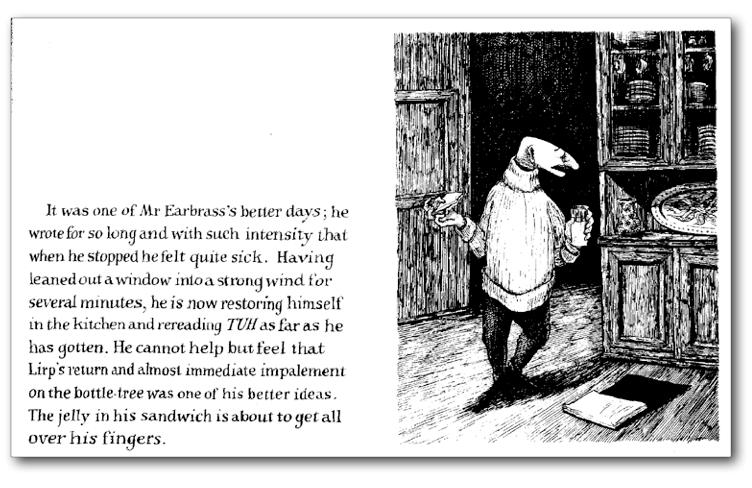
Last weekend, while moving some of my Edward Gorey collection, I made the mistake of pausing to reread The Unstrung Harp. As near as I can determine, the only differences between Mr Earbrass and myself is his lack of hair and genius use of bottle-tree impalement. Damn you, Earbrass

Mrearbrass

Edward Gorey, The Unstrung Harp, Or, Mr Earbrass Writes A Novel


Is Nothing Safe From Tildazation?

Okay, so Google has its knickers in a bunch about Bing–I get it: time for desperate Me-Too moves. Which, of course, means saying goodbye to the comforting minimalism of Google’s input page. And given my taste for austere interface design, you can imagine that I’m a bit grumbly about this.

However, I’m also the sort of Can-Do Guy who sees opportunities in almost everything, and since a picture was needed–wait for it–there was no question that it had to be Tilda. Further, the fact that the Google elements had been redesigned to be knocked-out of the background meant my old friend Black needed to be called in–to keep things appropriately quiet. It’s just the way I stylistically roll . . .

Thus, a video screen-grab and and little Pixelmator later, this is my new and (yes, vastly) improved search page. Opportunity. More accurately, given my Tilda-smitten circumstances, thrilling opportunity.

Tildaizedgoogle

Working With Injury: Loss, Imperfection And Art

In one of those increasingly prevalent and startling online juxtapositions, YouTube has clips of Marianne Faithfull singing identical arrangements of “As Tears Go By” that are separated by 44 years of living–a period in??which she lost her voice and first-blush beauty and, in the process, found herself. What emerges is a portrait of an artist who has grown into her material, filling it out with hard-earned maturity.

She owns the 2009 version of “As Tear Go By” in ways that are both unimaginable and impossible in 1965. In 2009, she plucks the song from within herself, singing from a vantage of understanding; the missed notes of her wabi-sabi voice enriching the song instead of diminishing it.

In 1965, the mission had clearly been negotiation of the next phrase, while in 2009, she’s thinking ahead to the succeeding conveyance of emotion. Solemn wistfulness has been replaced by a complex, world-weary bemusement: Four decades have significantly shifted the song’s center of gravity–where it was once about experiencing, it’s now about recollection.

This is underscored by revisiting a 45-year-old pop hit using its original arrangement. By choosing the same musical frame for an unavoidably much-changed performance, Faithfull is signaling that this is not marginal gloss on or a reinterpretation of her earlier version. Rather, it’s a deconstruction of personal and pop history–an act of artistic defiance. Using the same arrangement purposely inserts an unequal sign between the two performances–the absence of further continuity forces the listener to focus instead on the differences.

In her own “Bored By Dreams” (from A Secret Life), Faithfull observed, “After a certain age / Every artist works with injury.” And that’s what I think her 2009 Jagger/Richards simulacrum is doing–tapping into the lessons learned from missteps and demonstrating their uses . . .

The People’s Business

I happen to be downtown tonight for dinner and snapped this picture across the street from the Capitol.

See that light above the dome? It’s only there when Congress is in session, which in this case means the Senate.

Over there in the darkness Republicans are doing everything in their power to send HCR back to the House. But I also have to believe that over there in the darkness Democrats are too smart, too focused and too committed to be stopped in getting HCR done.

That light up there means that The People’s Business is being conducted. And standing here tonight, that light looks a lot like hope.

Photo

Sent from my iPhone

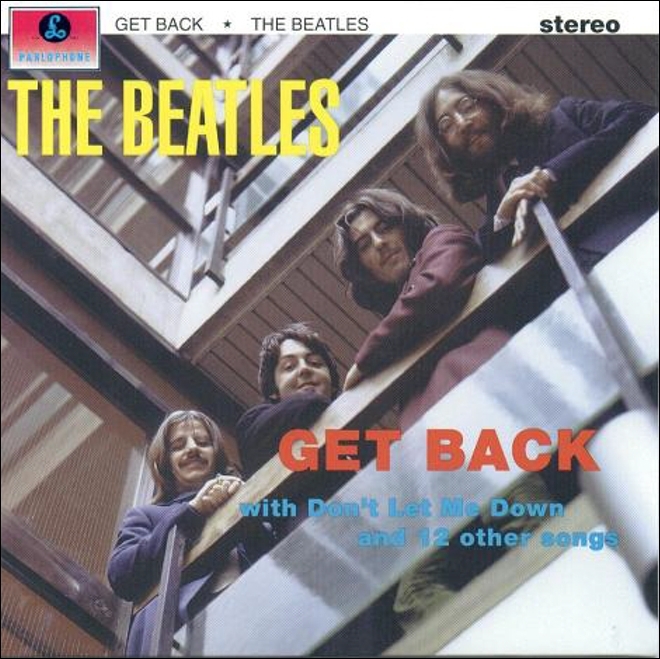
DIY Beatles: Rethinking Let It Be

It doesn’t get much more FanBoi than this–some brief notes on a lunch-hour project that paid big aesthetic dividends:

I’m finally getting around to ripping last year’s Beatles remasters into iTunes, and I’ve been deferring Let It Be because, well, you know–the whole Spector Wall-of-Sound thing. My problem is that I have absolutely no issues with the mixes of the purely live tracks–I actually like them. But when the orchestras and choirs smother “The Long and Winding Road,” “I Me Mine,” “Let It Be” and “Across the Universe,” I’m a massively unhappy music lover.

Now, I know what you’re going to say–because I thought about it, too: Why not simply rip McCarney’s remixed and resequenced Let It Be . . . Naked? Well, (a) as already noted, I like most of the mixes on the original collection; (b) Sir Paul and company wound-up over-producing the touted under-production–it’s stripped back, yeah, but also given a sonic Photoshopping to within an inch of its art, and, closely related, (c) the sound stage on the Let It Be . . . Naked is weirdly flat–there’s almost no depth to those remixes.

Thus, I was still wondering what to do with Let It Be when??something occurred to me: The Beatles’ Past Masters had also been remastered–and disc two contained fabulous versions of “Get Back,” “Across the Universe” and “Let It Be.” (And, as a side-benefit, these are George Martin productions.) Do you see where I’m going with this?

Further, on the second disc of The Beatles Anthology 3, there are un-Spectorized live-in-studio versions of “The Long and Winding Road” and “I Me Mine,” that were also produced by Martin. Versions, it should be noted, that were blessed at the time by all three surviving Beatles. [See update at the end of this post.]

So let’s recap: By swapping-in the aforementioned alternate Let It Be songs, I manage to retain the quality of the 2009 remasters in all but two cases; I eliminate those vastly annoying wall-of-sound moments; and I give almost half of the collection back to George Martin, who had originally produced it upstream of Phil Spector. And additionally, I’m able to keep the original sequencing of the collection (which is far superior to Sir Paul’s retread).

During lunch today, I ripped into iTunes the songs needed for my reconsidered version and matched the levels of the swapped material to those of the remaining songs from the remastered Let It Be.

In addition, I trimmed the opening of the inserted “Across the Universe” by 20.7 seconds to lose the birds-in-flight sound effects. Wings, however, still do briefly flutter at the end of the cut, and during another lunch hour, I’ll fire-up GarageBand and create an earlier fade to also eliminate this effect. On the other hand, I let remain George’s studio-chatter intro to the new “I Me Mine” because it matched the other snippets of conversation which punctuate the collection.)

A couple seconds of silence was also trimmed from the end “For You Blue” to more quickly begin the new “Get Back.”

And there you have it–with mindboggling Fan Hubris, I’ve managed to “fix” a recording that’s been bugging me for 40 years. For me, Let It Be is now completely wince-free, but, of course, your own mileage may vary . . .

Instructions for Making Your Own Reconsidered Let It Be

Take one 2009 remaster of Let It Be and swap-in the following material:

 1. “Two of Us”

 2. “Dig a Pony”

 3. “Across the Universe”

(Past Masters, 2009 remaster, George Martin, producer)

 4. “Don’t Let Me Down”

(Past Masters, 2009 remaster, George Martin, producer)

 5. “I Me Mine”

(The Beatles Anthology 3, 1996 remaster, George Martin, producer)

 6. “Dig It”

 7. “Let It Be”

(Past Masters, 2009 remaster, George Martin, producer)

 8. “Maggie Mae”

 9. “I’ve Got a Feeling”

10. “One After the 909”

11. “The Long and Winding Road”

(The Beatles Anthology 3, 1996 remaster, George Martin, producer)

12. “For You Blue”

13. “Get Back”

(Past Masters, 2009 remaster, George Martin, producer)

Getback5b_2

[Updates: Upon further consideration, I’ve opted to use the basic track of “Across The Universe” found on the second disc of The Beatles Anthology 2. It takes the song down a semi-tone to its original speed, dispenses with the non-Beatle backing vocals and completely loses the sound effects.

In addition, “Don’t Let Me Down,” from the stereo Past Masters compilation, was added as the fourth song. This was done in deference to an earlier, nearly released version of the album–as evidenced by its inclusion on the cover art.]

This Summer, Horror Has A New Name

You were terrified by Village of the Damned; you were chilled by Children of the Damned–but this summer nothing can prepare you for 

House Cats of the Damned 

They’ve been asleep for what seems like centuries, but now mankind’s use of electric can openers has awakened them . . .

0housecatsofthedamned

The Golden Compass, Sam-Spliced ™

Sam-Splicing ™ is made possible by Sam Elliott’s immaculate, almost miraculous consistency across roles in disparate films. The unintended benefit of this is the possibility of immeasurably improving any motion picture that features Elliott by simply adding an appropriately looped version of his Big Lebowski introduction.

Take, for example, The Golden Compass, which received mixed reviews upon its release. Now imagine this film Sam-Spliced ™. The film would open with outtake footage of Elliott’s airship floating through the night sky as we listen to Elliott’s voiceover:

***

“A way out in the multiverse there was an ermine, ermine I want to tell you about, ermine by the name of Pantalaimon. At least, that was the handle his lovin’ parents gave him, but he never had much use for it himself. This Pantalaimon, he called himself the Daemon. Now, Daemon, that’s a name no one would self-apply where I come from. But then, there was a lot about the Daemon that didn’t make a whole lot of sense to me. And a lot about where he lived, like-wise. But then again, maybe that’s why I found the place s’durned innarestin’.

“They call Torre degli Angeli the Tower of Angels. I didn’t find it to be that exactly, but I’ll allow as some nice folks lived there once. ‘Course, I can’t say I seen Oxford, and I never been to Bolvangar, and I ain’t never seen no queen in her damn undies as the fella says. But I’ll tell you what, after seeing Torre degli Angeli and thisahere story I’m about to unfold–wal, I guess I seen somethin’ ever’ bit as stupefyin’ as ya’d see in any a those other places, and in English too, so I can die with a smile on my face without feelin’ like the good Lord gypped me.”

***

Now admit it–don’t you immediately feel more predisposed to The Golden Compass than ever before? Yeah, me too. And this, ladies and gentlemen, is the potential power of Sam-Splicing ™. I rest my case.

Dualsam

The unswerving consistency of Sam Elliott:The Big Lebowsk and The Golden Compass 

Not Best Or Recommended Or Even New

The 20 collections of music on this list have three things in common: (1) They were all released in 2009, (2) they were all purchased by me and (3) of all the music I bought last year, these are the ones that ended up within six feet of the player and remained there until New Year’s Eve.

See this as an honest look back–it’s not about new music or fashionable music or infrequently played music. This is the stuff that wound up providing my life’s soundtrack for those 12 months–not by design but, well, accretion: The pieces took hold at an almost unconscious level and never let go.

What’s evident from this idiosyncratic list–which, sadly, is only a part of my purchases in 2009–is that I am to the music industry what a high-roller is to Las Vegas, and yet the major labels, Big Radio and most venues are doing nothing to tap, much less encourage, my spendthrift behavior. I submit to you that this music industry blindness is far more problematic and damaging to profits than iTunes or piracy because I can say with a fair degree of confidence I’m among that 20 percent of consumers that, if courted, might provided the proverbial 80 percent of profits.

Which brings us to what’s not apparent about this list–with one exception, I bought physical copies of all these releases. (The Joe Pernice originally arrived as mp3s, but was soon replaced by an actual disc.) Make no mistake–they all wound up digitalized, but they began as collectable objects. Something the distribution chain should keep in mind as compact discs are squeezed out of existence by downloads at one end and retro-vinyl at the other.

Anyway, welcome to my most-listened-to musical world, circa 2009–this is why all of Amazon’s fuzzy-logic predictions about what I’ll want next are almost always memorably wrong . . .

  1  Manafon–David Sylvian
  2  Thin Air–Peter Hammill
  3   Glitter and Doom–Tom Waits
  4   It Feels So Good When I Stop–Joe Pernice
  5   Memoryhouse–Max Richter
  6   Yes–Pet Shop Boys
  7   Goodnight Oslo–Robyn Hitchcock and the Venus 3
  8   The Occurance of Slope–Steve Jansen
  9.   Live In Vienna, 1973–Miles Davis
 10  Wait For Me–Moby
 11  Live At The Paradiso–Van Der Graaf Generator
 12  Easy Come, Easy Go–Marianne Faithfull
 13  Live In London–Leonard Cohen
 14  The Beatles In Mono (Box)–The Beatles
 15  Twelve Nights In Hollywood (Box)–Ella Fitzgerald
 16  Shostakovich: 15 String Quartets (Box)–Beethoven Quartet
 17  Side Steps (Box)–John Coltrane
 18  The Singular Thomas Dolby–Thomas Dolby
 19  The Impulse! Albums, Vol 3 (Box)–John Coltrane
 20  Kind of Blue (50th Anniversary Legacy Ed)–Miles Davis